Contact Us (858) 444-2300

Blog

Why More Companies Are Exploring Employee Ownership

Posted by Marc S. Schechter | Jun 23, 2026 | 0 Comments

As business owners look toward the future, many are asking the same question: What happens next? Whether driven by retirement, succession planning, talent retention, or a desire to preserve a company's legacy, organizations across the country are increasingly exploring employee ownership as part of their long-term strategy. Once considered a niche ownership model, employee ownership has become a growing topic of discussion among business leaders, policymakers, workforce development professionals, and advisors. Recent conversations surrounding artificial intelligence, workforce resilience, and economic participation have only accelerated interest in employee ownership structures. For many companies, employee ownership is no longer simply a retirement plan concept. It is becoming a strategic business conversation. More companies are exploring employee ownership because it can provide a succession planning solution, create employee engagement opportunities, support retirement security, and help preserve organizational culture and independence. While employee ownership is not the right fit for every business, it is increasingly being considered alongside traditional sale, merger, and transition options.

California’s AI Executive Order and Employee Ownership: An Emerging Conversation About the Future of Work

Posted by Marc S. Schechter | May 28, 2026 | 0 Comments

California’s recent Executive Order addressing the impact of artificial intelligence on workers and businesses reflects a growing national conversation about how emerging technologies may reshape the workforce, organizational structures, and economic participation. Among the more notable aspects of the Executive Order is its recognition of employee ownership models as part of the broader discussion surrounding workforce resilience and economic transition in the AI era. For those of us working in the ERISA and employee benefits space, this reference is significant.

Preparing for 2026: IRS Announces Updated Retirement Plan Limits Under Notice 2025-67

Posted by Marc S. Schechter | Nov 13, 2025 | 0 Comments

Each year, the Internal Revenue Service (IRS) adjusts key contribution and benefit limits for qualified retirement plans to reflect cost-of-living increases and statutory changes. These updates affect how much employers and employees can contribute to, or accrue under, tax-qualified retirement plans. IRS Notice 2025-67 provides the official 2026 limits for 401(k), 403(b), 457(b), and other qualified plans. Plan sponsors should review these changes now to ensure timely compliance and maximize savings opportunities for plan participants.

Denied Benefits Under Retirement and Disability Plans? Your FAQs Answered

Posted by Corey F. Schechter | Aug 12, 2025 | 0 Comments

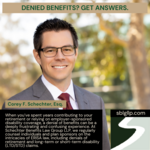
When you’ve spent years contributing to your retirement or relying on employer-sponsored disability coverage, a denial of benefits can be a deeply frustrating and confusing experience. At Schechter Benefits Law Group LLP, we regularly counsel individuals and plan sponsors on the intricacies of ERISA law, including denials of retirement and long-term or short-term disability (LTD/STD) claims. 

Considerations for Technology Companies Managing Section 409A Risk and Equity-Based Compensation

Posted by Corey F. Schechter | Jul 29, 2025 | 0 Comments

The technology sector is booming—fueled by rapid expansion in generative AI, cloud platforms, SaaS solutions, and venture-backed innovation. In San Diego, this growth intersects with the region’s globally recognized biotech ecosystem, home to hundreds of research-driven companies that rely on advanced data tools, AI discovery platforms, and a highly specialized workforce. From early-stage biotech startups to publicly traded life sciences firms, companies in the region use equity-based compensation (e.g., stock options, restricted stock units (RSUs)) and nonqualified deferred compensation (NQDC) to attract and retain top scientific and executive talent. However, without careful legal structuring and administration, these arrangements can easily run afoul of Section 409A of the Internal Revenue Code (IRC), triggering steep tax penalties and administrative exposure.

Frequently Asked Questions on IRC § 409A Nonqualified Deferred Compensation Plans and The Risks on Noncompliance

Posted by Corey F. Schechter | Jul 22, 2025 | 0 Comments

Nonqualified Deferred Compensation (NQDC) arrangements—commonly structured under IRC § 409A—are invaluable tools for executives and key employees by offering customized compensation packages and aligning their financial interests with the company's long-term goals. However, missteps may trigger severe penalties under IRS rules.

Mid-Year Compliance Check: Self-Correction Opportunities for Plan Sponsors

Posted by Corey F. Schechter | Jul 15, 2025 | 0 Comments

The midpoint of the calendar year presents an ideal opportunity for retirement plan sponsors to assess their plan’s compliance status. Conducting a mid-year review not only helps identify and correct administrative errors early, but it also leverages the expanded options available under the IRS’s Employee Plans Compliance Resolution System (EPCRS), including the Self-Correction Program (SCP). These updates, outlined in IRS Revenue Procedure 2021-30, empower plan sponsors to fix a broader range of plan errors without the need for formal IRS approval.

Top Questions About IRS Employee Plans Compliance Resolution System (EPCRS) Correction Programs: SCP, VCP, and AuditCAP

Posted by Marc S. Schechter | Jul 08, 2025 | 0 Comments

Administering a retirement plan comes with a host of responsibilities—and occasional errors are inevitable. Fortunately, the IRS offers several correction pathways under its Employee Plans Compliance Resolution System (EPCRS) to help plan sponsors preserve the tax-qualified status of their plans. Below, we’ve compiled answers to some of the most frequently asked questions related to the Self-Correction Program (SCP), Voluntary Correction Program (VCP), and Audit Closing Agreement Program (AuditCAP).

What Plan Administrators and Sponsors Should Know About Relief for Missed Minimum Contributions to a Single-Employer Defined Benefit Pension Plan under IRC § 412(c)

Posted by Corey F. Schechter | Jun 17, 2025 | 0 Comments

Sponsors and administrators of defined benefit pension plans (DBPPs) have a legal obligation to fund their plans in accordance with minimum contribution requirements under the Internal Revenue Code (IRC). A failure to make these contributions can result in significant penalties and endanger plan qualification. However, in certain cases, for single-employer DBPPs, relief may be available under IRC § 412(c).

Empowering Employee Ownership: Federal and California Legislative Initiatives on ESOPs

Posted by Marc S. Schechter | Jun 10, 2025 | 0 Comments

Recent legislative developments at both the federal and state levels underscore a growing commitment to promoting employee stock ownership plans (ESOPs) as a means to empower workers and foster inclusive economic growth. In May 2025, significant strides were made with the introduction of two federal bills aimed at enhancing ESOP structures, alongside California's proposed SB-713, which seeks to integrate ESOP considerations into state contracting processes.

QDROs and 401(k) Loans in Divorce: What Family Law Attorneys and Clients Should Know

Posted by Corey F. Schechter | Jun 03, 2025 | 0 Comments

Dividing retirement accounts in a divorce can be one of the most complex aspects of property division. When a qualified retirement plan is involved, a Qualified Domestic Relations Order (QDRO) is necessary to legally allocate plan benefits to an alternate payee—typically the non-employee spouse. But what happens when there’s an outstanding loan on the account?

Understanding ERISA in 2025: Key Considerations for Plan Sponsors

Posted by Marc S. Schechter | May 27, 2025 | 0 Comments

As we move through 2025, the Employee Retirement Income Security Act of 1974 (ERISA) remains a cornerstone of employee benefits law. For plan sponsors, keeping up with ongoing changes in regulatory guidance, enforcement trends, and litigation risks is critical. Here’s a practical overview of what plan sponsors need to know this year to stay compliant and protect plan assets and participant rights.

What You Need to Know About QDROs: Dividing Retirement Benefits in Divorce

Posted by Paul D. Woodard | May 20, 2025 | 0 Comments

Dividing retirement benefits during a divorce can be complicated. A key tool in this process is a Qualified Domestic Relations Order (QDRO), a legal order that ensures retirement plan benefits are properly allocated between a plan participant and an alternate payee (typically a former spouse or dependent). Understanding how QDROs work can help avoid costly delays and protect everyone’s interests.

Don’t Let QDRO Mistakes Derail Your Divorce Settlement: Top Pitfalls and How to Avoid Them

Posted by Corey F. Schechter | May 13, 2025 | 0 Comments

When going through a divorce, dividing retirement accounts is often one of the most complex — and overlooked — aspects of the process. A Qualified Domestic Relations Orders (QDROs) is a legal tool used to divide certain retirement plans. Unfortunately, many individuals (and sometimes their attorneys) make mistakes that can cost them thousands in retirement benefits.

ERISA Insights - Enforcing Fiduciary Duty Judgments Through QDROs: Lessons from In re Marriage of DeBenedetti & Ensburg (Cal. Ct. App. 2024)

Posted by Corey F. Schechter | May 06, 2025 | 0 Comments

A recent published opinion from California’s Fourth District Court of Appeal has opened the door to using Qualified Domestic Relations Orders (QDROs) to satisfy breach of fiduciary duty awards—even when the QDROs assign 100% of a party’s ERISA-governed retirement benefits, including amounts earned after the marriage. The case, In re Marriage of DeBenedetti & Ensburg, No. D082801, 2024 WL 1470780 (Cal. Ct. App. Apr. 5, 2024), may soon become a touchstone for attorneys navigating postjudgment enforcement of marital property rights.

Navigating QDROs & QDRO Litigation: Essential Insights for Plan Administrators and Participants

Posted by Corey F. Schechter | Apr 29, 2025 | 0 Comments

Qualified Domestic Relations Orders (QDROs) are critical in dividing retirement benefits during divorce proceedings. Given the substantial value these benefits represent, it's essential for both plan administrators and participants to understand the legal requirements and procedural nuances involved. When issues such as ambiguous order language, non-compliance with ERISA, or delays in processing arise, they can quickly lead to disputes—and ultimately, litigation. Being proactive and well-informed can help prevent costly legal battles and ensure that retirement benefits are divided fairly and in accordance with federal law.

Celebrating National Employee Benefits Day (April 2, 2025): The Power of Employee Benefits in Shaping Tomorrow

Posted by Marc S. Schechter | Apr 02, 2025 | 0 Comments

On National Employee Benefits Day, we take a moment to recognize the essential role employee benefits play in enhancing the lives of workers across the country. As we reflect on the evolving benefits landscape, it's clear that comprehensive benefit programs are more than just compensation—they're a powerful tool for fostering financial security, employee well-being, and business success.

  • 1 of 14

Sample

Subscribe to our Newsletter

Menu